What is Vinyasa yoga? A guide to flow
Vinyasa is probably the style most people picture when they think of a yoga class: steady breathing, one posture flowing into the next, and a good warmth by the end. It is also one of the most varied styles, because no two teachers sequence it quite the same way. Here is what Vinyasa means, how a class works and how it fits into our days at Basecamp.
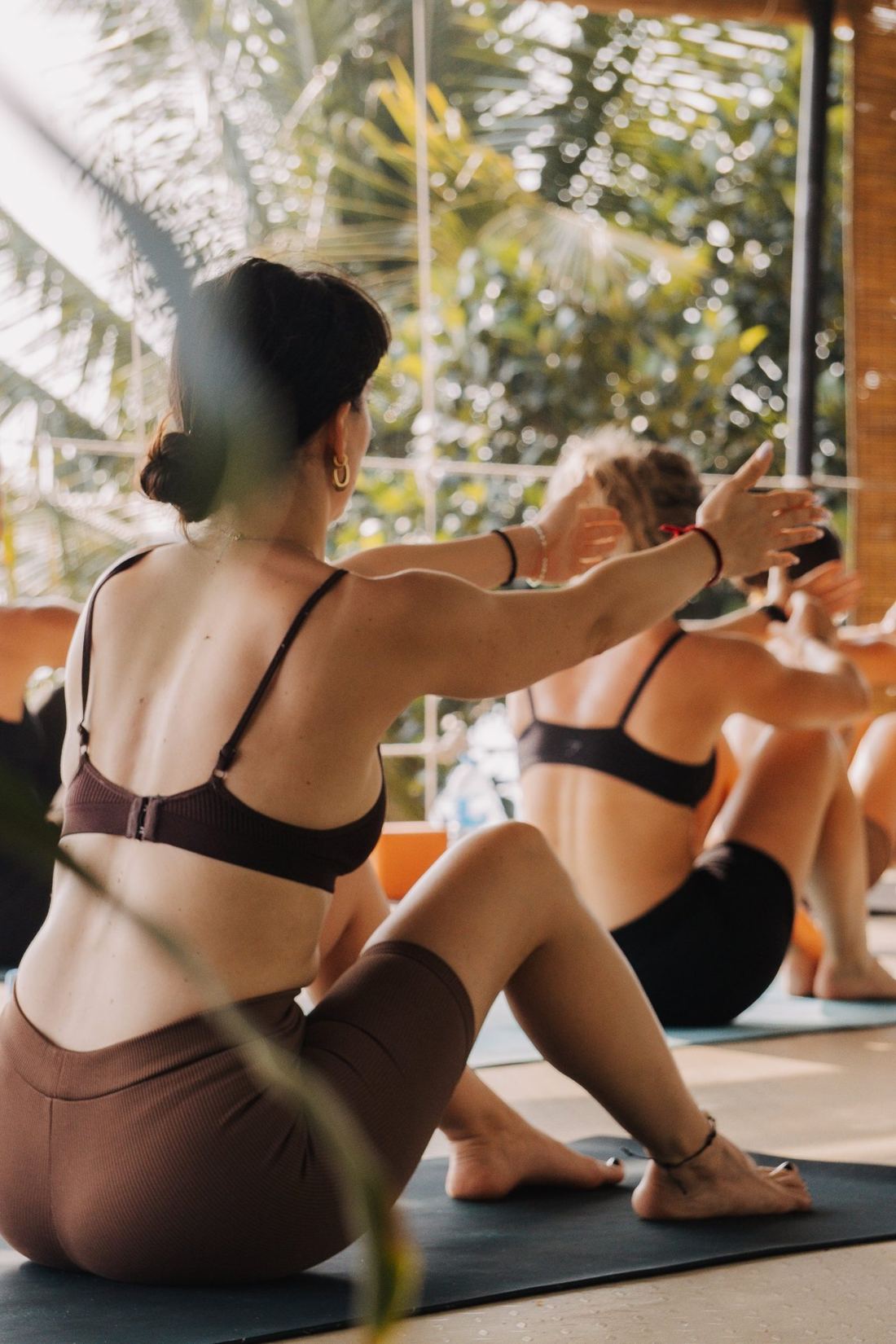
What the word means
Vinyasa is a Sanskrit word that refers to the arrangement or placing of movements, and in yoga it has come to mean a smooth transition from one posture to the next. In a yoga class it describes the way postures are linked together, with each movement matched to an inhale or an exhale. You will often hear teachers say “one breath, one movement”.
The word is also used for a short linking sequence you will meet in most classes: a low plank, an upward-facing dog and a downward-facing dog, moving with the breath. When a teacher says “take a vinyasa”, that is what they mean.
Where Vinyasa comes from
Modern Vinyasa grew out of the teaching of Tirumalai Krishnamacharya in Mysore, India, in the 1930s, who taught a flowing, breath-led style of practice. One of his students, K. Pattabhi Jois, developed it into Ashtanga yoga, with a fixed sequence of postures. Over the following decades teachers around the world kept the breath-linked flow but let go of the fixed order, and the result is what most studios now call Vinyasa or Vinyasa flow.
How a Vinyasa class works
Most Vinyasa classes follow a gentle arc. They start with breathing and a slow warm-up, build through sun salutations into standing postures, balances and perhaps some strength work, then wind down with seated postures, twists and a long rest at the end. The breath sets the pace throughout, and it is usually steady and slightly audible.
Within that shape there is a lot of freedom. One teacher might build the whole class towards a single posture, another might keep it slow and mindful, another might make it strong and sweaty. That variety is part of the appeal: you can practise Vinyasa every day and still be surprised.
Sun salutations, the heart of the flow
Almost every Vinyasa class includes sun salutations, or Surya Namaskara: a short loop of forward folds, a lunge or step back, a low plank, upward dog and downward dog, each move on an inhale or an exhale. Repeated a few times, they warm the whole body and set the breathing rhythm for the rest of the class. Once you know them, you will recognise them in almost any class you join, anywhere in the world.
Vinyasa or Ashtanga?
The two are close relatives. Both link breath and movement and both use sun salutations. The big difference is the sequence. In Ashtanga the order of postures is the same every time, so you learn it by heart and measure your progress against it. In Vinyasa the teacher creates a new sequence for each class, which keeps things fresh but means you follow along rather than knowing what comes next. Many people enjoy both, and at Basecamp you will often meet both in the same week.
Is Vinyasa suitable for beginners?
Yes, as long as you take it at your own pace. You do not need to be flexible or strong to start, and you can always rest in child’s pose or skip a vinyasa and wait for the group to catch up. Telling the teacher before class that you are new means they can offer simpler options as you go.
Wear something you can move in, practise on an empty stomach or after a light snack, and bring water. Our classes provide mats, blocks and props.
Vinyasa at Basecamp
Our 8:00 morning class is Ashtanga most days for now, with Vinyasa on some mornings depending on who is teaching. Several of this season’s teachers teach Vinyasa in their own way: Poorvika’s slow, mindful flow, Itzy’s Power Vinyasa, drawing on her background in dance, and Freya and Anna’s classes too. Classes last 75 minutes, are open to all levels, and take place in our thatched shala above Weligama harbour.
After the morning class there is breakfast at the long table, and at 16:30 the day slows right down with Yin yoga. You can see who is teaching each day on our yoga page, and you are welcome to join as a drop-in if you are not staying with us.
Come and stay with us
Pick your dates and room, and the yoga and breakfast are already included.
More guides: A yoga retreat in Weligama · Yoga and surf in Weligama · All guides