What is Yin yoga? Slow, held poses explained
Every afternoon at 16:30, as the light over Weligama Bay turns gold, our shala goes quiet for Yin. It is the slowest class we teach and, for many guests, the one they miss most when they go home. Here is what Yin yoga is, where it comes from and what to expect from your first class.
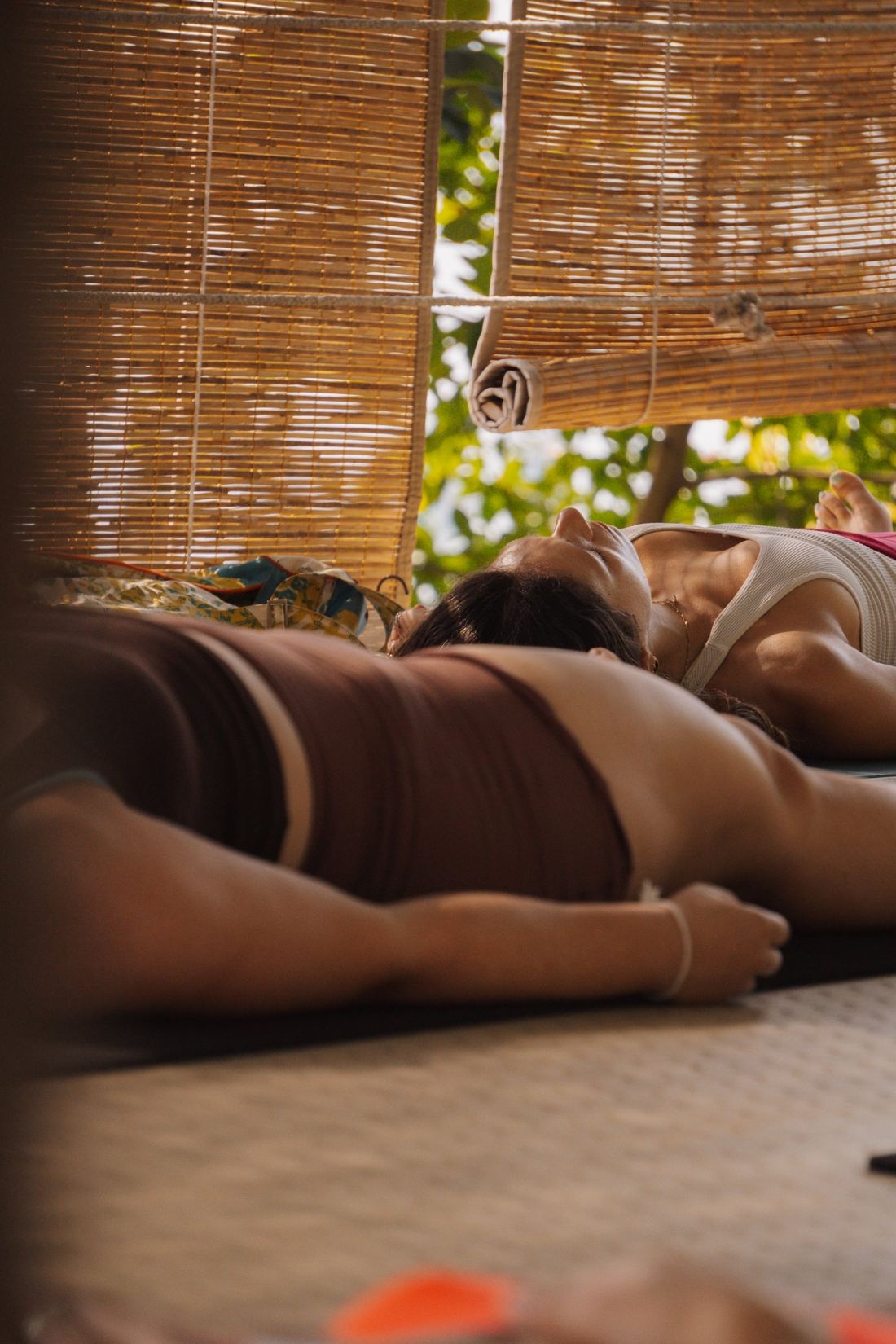
What Yin yoga is
Yin is a slow, floor-based practice in which postures are held for a long time, usually several minutes each, with the muscles as relaxed as possible. Instead of moving with the breath from one shape to the next, you settle into a posture, find a place where you feel a clear but comfortable sensation, and then stay there quietly.
The name comes from the Taoist idea of yin and yang. Yang describes what is active, warm and moving; yin describes what is still, cool and receptive. Most yoga classes, like our morning Ashtanga and Vinyasa, are yang in character. Yin is the other half.
Where Yin comes from
Yin draws on long-held postures that have been part of yoga for centuries, but the style itself is quite young. It began with Paulie Zink, a martial artist and Taoist yoga teacher, in the late 1970s. Paul Grilley studied with him in the 1980s and developed the approach further, and Sarah Powers, who studied with Grilley, suggested the name “Yin Yoga”. Through their teaching and books it has since spread to yoga studios all over the world.
What a Yin class feels like
A typical class has a handful of postures, mostly seated or lying down, each held for somewhere between two and five minutes, sometimes longer. Teachers often use playful names for them, such as butterfly, caterpillar, dragon, sphinx and saddle. Bolsters, blocks and blankets are used generously so that you can rest into each shape.
The first minute of a hold is often the busiest, as the mind looks for something to do. Then things begin to settle. Many teachers use this time for breath awareness or a short reflection. Coming out of a posture slowly, and resting for a few breaths before the next one, is part of the practice.
Yin is not passive, though. Staying still with a strong sensation takes patience, and the gentle rule is to go only as far as feels right for you that day. If a posture is sharp, painful or makes you hold your breath, ease off or come out.
Tips for your first Yin class
Arrive a few minutes early and pick up your props before class starts, as you will use them more than in any other style. Wear something warm enough to stay still in, or keep a light layer nearby for the final rest. Do not chase the deepest version of a posture; a softer shape you can stay in comfortably for a few minutes is the whole point. And let the quiet do its work. It can feel strange at first, but most people find that by the end of a week the stillness is the part they look forward to.
Who Yin is for
Almost everyone. You do not need to be flexible, and complete beginners often find Yin the easiest class to join, because there is nothing to keep up with. It also pairs beautifully with more active days: plenty of our guests swear by it after a morning of practice or a few hours in the surf (our guide to yoga and surf in Weligama has more on that).
Yin at Basecamp
Yin is our afternoon class every day at 16:30. It lasts 75 minutes, is open to all levels and takes place in our thatched, open-sided shala above Weligama harbour, with mats, blocks and props provided. Each teacher brings their own flavour: Natasha weaves in breathwork and meditation, Itzy teaches Somatic Yin, and Freya’s signature class pairs long-held postures with optional hands-on massage using Ayurvedic balms and oils, with a discreet way to opt in or out at the start.
After class the evening is yours, whether that is an early night or the optional social dinner in town. Yin is included in every direct stay, and non-guests can join as a drop-in. You can see who is teaching each afternoon on our yoga page.
Come and stay with us
Pick your dates and room, and the yoga and breakfast are already included.
More guides: A yoga retreat in Weligama · Yoga and surf in Weligama · All guides